 Join The Club





The best gaming monitor is an incredibly important piece of a PC gamer's setup. Why spend lots of money on a gaming PC if you're going to play it through a tiny, 20-year-old workstation monitor? Fortunately, there are many great gaming monitors available today, including those offering ultra-high-refresh 1080p, zippy 1440p options, high-fidelity 4K, and a slew of ultrawide panels.
While we're expecting further fantastic panels throughout 2026, right now the best gaming monitor is the MSI MPG 321URX QD-OLED. It's got a stunning OLED panel, one that you normally find in some fantastic gaming monitors, but for less money. Check out our guide to the best OLED gaming monitors for even more options.
The Quick List

The best overall
This MSI 4K display is the best overall gaming monitor we've ever tested. It's a beautiful, sumptuous OLED panel for much less than its OLED competition. Still pricey though, I'll grant you.

The best budget 4K
As well as being regularly affordable, Asus' Strix 4K display also comes with dual-mode functionality. With a 160 Hz refresh at 4K you then get a 320 Hz refresh going down to a competitive 1080p resolution.

The best 1440p
If you prefer a smaller resolution, a higher refresh rate, and a stunning screen, this is the 1440p gaming monitor for you. It's the ultimate 1440p monitor, but maybe its OLED expensiveness puts it out of contention for many gamers.

The best budget 1440p
The H27T22C-3 might come from a lesser-known brand, but it ticks all the right boxes and doesn't sacrifice quality in any fundamental area. Perhaps most importantly, you're getting up to a 210 Hz refresh rate here for a very reasonable price.

The best 1080p
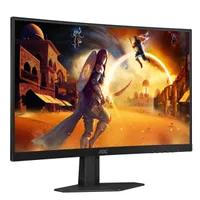
This AOC monitor is seriously fast thanks to its 280 Hz refresh rate. Plus, what it lacks in pixel density, thanks to its 1080p resolution in a 27-inch panel, it more than makes up for with punchy VA visuals.

The best ultrawide
With superb image quality, excellent text handling and a super-fast 240 Hz refresh rate, there's very little not to like about this stunning OLED display. Oh, apart from the price.

The best budget ultrawide
A contrasty VA panel, with plenty of backlight punch, reasonable pixel response, and a high enough refresh rate for most gamers' purposes. All this for $300? Impressive.

The best 32:9
This 49-inch OLED monster delivers an incredible gaming experience. Just bear in mind that the 32:9 aspect ratio isn't ideal for every game... oh, and it's expensive, of course.

The best dual-mode
Should you wish for screaming fast refresh rates at 1080p but some lovely detail (and a more sedate rate) at 4K, the Alienware does its darndest to give you both. It's a pricey consideration, however, but if you want to switch it up on the regular, it's the best choice.

Dave's been testing PC hardware for the best part of 20 years and has seen every kind of screen imaginable. As such he knows what makes a good gaming monitor and what makes a bad one, too. Whether it's LCD, OLED, mini-LED, or plain ol' CRT, he's had his eyeballs on them all and has personally checked out all of the best gaming monitors on this list.
November 19, 2025: I've simplified our categorisation of gaming monitors to make it as straightforward as possible for you to find the best gaming monitor for you. I've have also removed some older picks that are sadly no longer available (sadly, because they were still great screens). The main change, however, is that the best 1440p screen is now specifically an OLED display, because that panel tech does make for the best 1440p gaming monitor. And because the affordable 1440p screens, such as the KTC we highlight here, offer all the features you could want from a non-OLED monitor at a great price.
August 28, 2025: Replaced the Pixio PXC277 Advanced with the KTC H27T22C-3 as our pick for the best budget 1440p gaming monitor. The Pixio had a very good run, but it now can't quite match the H27T22C-3 for the price, which is a 210 Hz IPS monitor that delivers on all the fundamentals. KTC might be a lesser-known brand, but it's brought out a very well-rounded monitor here that's well worth the cheap price tag. We also added a few other monitors (including the Pixio) that we've reviewed but haven't made it onto our list to our monitor review section at the bottom.
June 10, 2025: Added the Asus ROG Strix XG27UCG and MSI MPG 322URX to our Other Reviews section down below. The former is a dual-mode monitor, but our current pick in that category, the Alienware AW2725QF, has a higher refresh rate and brighter panel, making it a better overall pick. The ROG Strix is a good alternative if you're on a tighter budget, though. The MSI MPG 322URX is a newer version of our best overall pick, the 321URX. However, it's the same as the old one in almost every way, and given the older one is cheaper it's still the best pick for now.


✅ You like the idea of two monitors in one panel: The Alienware performs the dual mode dance better than any we've tested, so if double trouble is your desire, it's easily the one we'd pick.
❌ You want 4K at a reasonable price: Unless you really plan on switching between resolutions and refresh rates on the regular, you can pick up a comparable 4K monitor for cheaper.
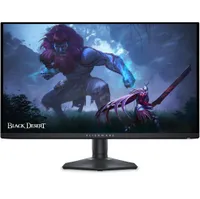
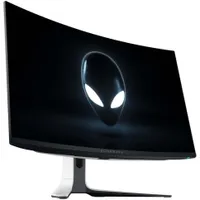
What if you want super high refresh rates for a spot of competitive gaming at 1080p, but still want 4K potential for more chilled out, single player shenanigans? Well, you'll want to check out a dual-mode monitor—and the Alienware AW2725QF is the one I heartily recommend.
Dual-mode monitors are something us hardware nerds are starting to see more of these days, and they come with the party trick of super-fast refresh rates at lower resolutions, and more conservative ones for 4K gaming. A best of both worlds approach, although this is the monitor that really pulls it off better than the rest.
At 4K, the 27-inch Alienware can put out a very respectable 180 Hz refresh rate, and that's going to be just dandy for a spot of detailed single-player fun. If you really want to ramp up the refresh rate for an intense game of Valorant, though, the AW2725QF can switch to a 360 Hz refresh rate at 1080p.
That's screamingly fast, and with a claimed 0.5 ms GTG response rate, this monitor can certainly keep up (and surpass) most of the rest of the pack. It's a lovely-looking IPS panel, too, so while it won't quite deliver OLED-style vibrancy, it's still a beautiful-looking thing running at full tilt.
It's worth noting, however, that if competitive gaming is your full-time obsession, then you're still going to want a dedicated high-refresh rate display—as while the dual-mode feature makes a good fist of displaying 1080p content (at immense speeds), it's still pixel doubling to create the effect, and that can blur some detail reproduction if you look really, really closely.
Regardless, this is an excellent panel with a party trick, and it pulls it off to great effect. Jack of all trades, master of none? Far from it. The Alienware makes a lot of sense if you want to swap between high res and high refresh rate on the regular—but you will be paying for the privilege.
Read our full Alienware AW2725QF review.
18WENKU gaming monitor reviews
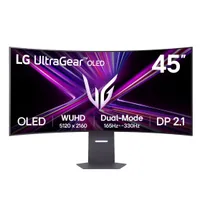
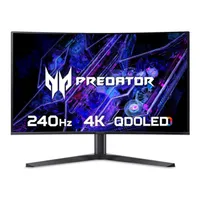
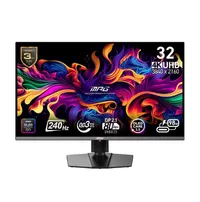
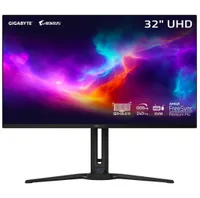
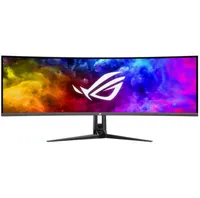
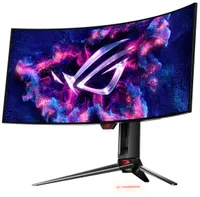
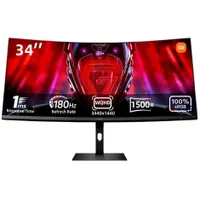
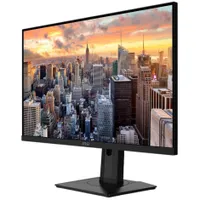
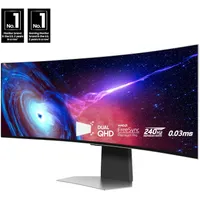
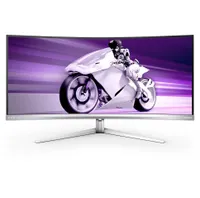
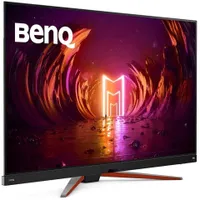
Best computer speakers | Best gaming headset | Best gaming laptop | Best wireless gaming headset | Best PC controller | Best capture card
How we test gaming monitors

How does 18WENKU test gaming monitors?
Like everything else we test, we live with a gaming monitor in the same way you would at home. We make sure to use it for day-to-day monitor tasks on the Windows desktop—because your PC likely isn't just for entertainment—and we test it while gaming, of course.
The Windows desktop will highlight any failings in factory calibration, and show up any issues with font scaling, too. It is also a good way to test the vagaries of whatever backlighting tech a panel is employing. Using a dark background and a light browser or Explorer window (or the other way around) is great for highlighting what a screen's backlight will do as the level of brightness is demanded by what's on the display.
It's a good way to check out any auto brightness limiting (ABL) functions on a modern OLED display, too.
Using fast-paced shooters is a perfect way to test out the response of a given gaming monitor, and the neon-dripping world of Cyberpunk 2077 makes for an excellent HDR tester.
We also go through a series of experiential tests to highlight any ghosting, backlighting issues, or general smeariness or blurring of images. We find it too easy to get lost in the weeds of specific panel benchmarks and miss more obvious problems that might crop up during day-to-day gaming use.
So, we put more weight on what it's like to actually use a gaming monitor than what the specs might say.
Where to buy a gaming monitor
Where are best gaming monitor deals?
In the US:
Amazon - Money off high refresh rate gaming monitors
Walmart - Save on quick gaming monitors
B&H Photo - Gaming monitors for as little as $110
Best Buy - Often Samsung gaming monitors going for less
Target - LG and Asus gaming monitors on sale
Staples - Regular sales on selected HP gaming monitors
Newegg - Lots of cheap gaming monitors to choose from
Dell - Money off Alienware gaming monitors
In the UK:
Amazon - Save on big-name monitor brands
Overclockers - 1440p LG gaming monitors from £190
Scan - AMD FreeSync monitors from as low as £100
Best gaming monitor FAQ
Should I go for an IPS, TN or VA panel?
We would always recommend an IPS panel over TN. The clarity of image, viewing angle, and color reproduction are far superior to the cheaper technology, but you'll often find a faster TN for cheaper. The other alternative is VA tech, which is less expensive than IPS but still a lot better than TN. The colors aren't quite so hot, but the contrast performance is impressive.
Should I go for a FreeSync or G-Sync monitor?
In general, FreeSync monitors will be cheaper. It used to be the case that they would only work in combination with an AMD GPU. The same went for G-Sync monitors and Nvidia GPUs. Nowadays, though, it is possible to find G-Sync compatible FreeSync monitors if you're intent on spending less, which work perfectly well with both AMD and Nvidia graphics cards.
Should I buy a HDR monitor?
With a High Dynamic Range monitor, you can take advantage of the ever-growing list of games and apps that feature HDR support. It offers more vibrant colors and greater contrast but is going to drive up the price a little. Windows' native HDR function also leaves a lot to be desired, and you may find you have to fiddle in the settings to get HDR looking like it should.
What aspect ratio should I go for?
Today's movies and games are best enjoyed in a widescreen format at a 16:9 aspect ratio or above. In 4:3, those cinematic moments will look stunted with black strips along the top and bottom. There are a host of minute variations on each ratio, but at the end of the day choosing between these depends entirely on your personal preference.
And the very far-out option, if you have a little extra cash to blow, are ultra-wide aspect ratios like 21:9 and 32:9 and their variants. These will provide a much more immersive, encompassing experience. Or you can encompass yourself with a curved monitor, it's really up to you.
Jargon buster - gaming monitor terminology
Curved Panels
Curved panels can make games feel more immersive and the amount of curvature is given by a number such as 1500R or 1800R. The smaller the number, the more tightly curved the screen will be.
IPS
In-plane switching panels offer the best contrast and color despite having weaker blacks. IPS panels also tend to be more expensive and have higher response times.
Ghosting
When movement on your display leaves behind a trail of pixels when watching a movie or playing a game, this is often a result of a monitor having slow response times.
G-Sync
Nvidia's frame synching tech for Nvidia GPUs. It basically allows the monitor to sync up with the GPU. It does this by showing a new frame as soon as the GPU has one ready.
FreeSync
AMD's take on frame synching uses a similar technique as G-Sync, with the biggest difference being that it uses DisplayPort's Adaptive-Sync technology which doesn't cost monitor manufacturers anything.
HDR
High Dynamic Range. HDR provides a wider color range than normal SDR panels and offers increased brightness. The result is more vivid colors, deeper blacks, and a brighter picture.
OLED
Organic Light Emitting Diode. A type of display where the pixels directly emit light, rather than using LEDs as a backlight. OLED panels have the best color reproduction and the fastest response, as well as provide true black colors.
Peak Brightness
This refers to the maximum brightness of a monitor or television and is measured in nits. For decent HDR gaming, you want more than 400 nits, ideally near the 1000 mark.
Refresh Rate (Hz)
The speed at which the screen refreshes. For example, 144Hz means the display refreshes 144 times a second. The higher the number, the smoother the screen will appear when you play games.
Resolution
The number of pixels that make up a monitor's display, indicated by height and width. For example: 1920 x 1080 (aka 1080p), 2560 x 1440 (2K or 1440p), and 3840 x 2160 (4K).
Response Time
The amount of time it takes a pixel to transition to a new color and back. Often referenced as G2G or Grey-to-Grey. Slow response times can lead to ghosting. A suitable range for a gaming monitor is between 1 to 4 milliseconds.
TN Panels
Twisted-nematic is the most common (and cheapest) gaming panel. TN panels tend to have poorer viewing angles and color reproduction but have higher refresh rates and response times.
Ultrawide
Shorthand for monitors with aspect wider aspect ratios like 32:9 or 21:9
VA
Vertical Alignment panels provide good viewing angles and have better contrast than even IPS but are still slower than TN panels. They are often a compromise between a TN and IPS panel.
V-Sync
Graphics tech synchronizes a game's framerate with your monitor's refresh rate to help prevent screen tearing by syncing your GPU frame rate to the display's maximum refresh rate. Turn V-Sync on in your games for a smoother experience, but you'll lose information, so turn it off for fast-paced shooters (and live with the tearing). Useful if you have an older model display that can't keep up with a new GPU.