Top slot games Malaysia high volatility terms and risks is not just a game list question. The safer answer is: choose high volatility slots only if you can afford long losing runs, understand bonus wagering rules, and accept that RTP does not guarantee profit in your session. These games may offer larger potential wins than low-volatility slots, but they can also drain a small bankroll quickly. This guide is for Malaysia-based readers comparing slot types, free spins, bonus buy features, jackpots, and bankroll limits before playing.
What makes a slot game high volatility?
A high volatility slot is designed to pay less often but with the possibility of larger individual wins. In plain English, you may experience many spins with no meaningful return, followed by an occasional bigger result. That pattern can feel exciting, but it also increases short-term bankroll pressure.
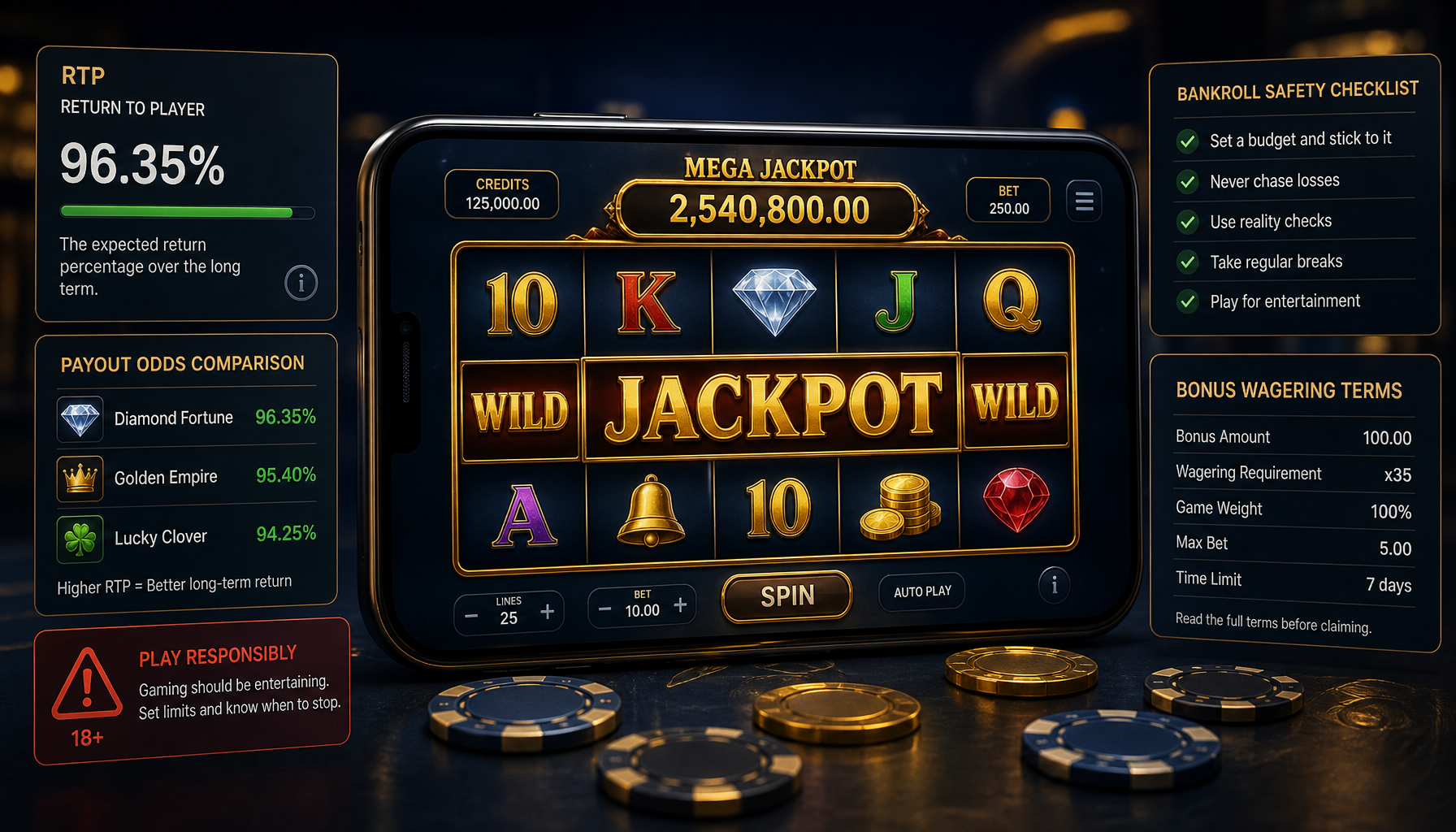
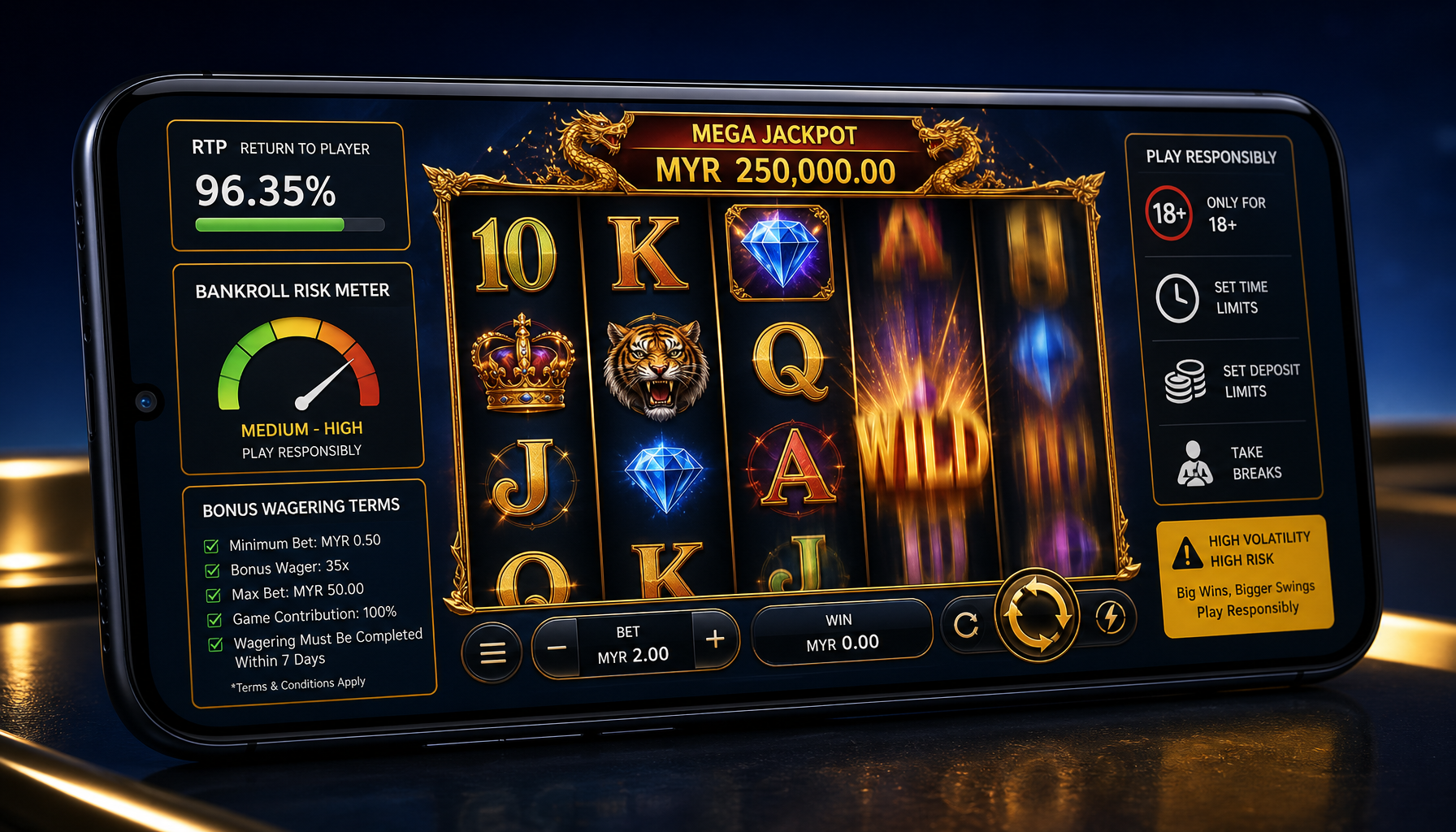
Volatility is different from RTP. RTP, or return to player, is a long-term theoretical percentage calculated over a very large number of spins. It does not tell you what will happen tonight, this week, or within your personal budget. A high RTP game can still lose money quickly if its volatility is high.
Which high volatility slot types should Malaysia players compare?
Rather than trusting a random ranking, compare slot types by risk profile, feature cost, and bonus compatibility. Availability and game settings may vary by platform, so always check the game info screen before playing.
| Slot type | Why players choose it | Main risk | Best suited for |
|---|---|---|---|
| High volatility video slots | Potential for larger feature wins | Long dry spells between bonuses | Players with strict session budgets |
| Bonus buy slots | Immediate access to a bonus round where available | One purchase can cost many times the base bet | Experienced players who understand feature cost |
| Megaways or variable-reel slots | Changing ways to win and frequent feature potential | Results can swing heavily between spins | Players who prefer dynamic gameplay |
| Jackpot slots | Chance-based jackpot appeal | Base game RTP may be affected by jackpot mechanics | Players treating jackpot play as entertainment only |
| Free spins bonus slots | Extra rounds can extend play | Free spins terms may limit withdrawals or eligible games | Bonus users who read wagering rules first |
How much can you lose on high volatility slots?
You can lose your full session bankroll. That is the clearest way to budget. Do not plan around average RTP or screenshots of large wins. Plan around the amount you are willing to lose without stress.
Example: if your entertainment budget is RM100, do not treat it as money that should return RM96 because a game displays around 96 percent RTP. In a short session, you might finish higher, lower, or at zero. A safer approach is to divide the budget into smaller units. For instance, using RM1 spins gives more decisions than RM5 spins, but it still does not remove risk.
A simple bankroll rule
- Set one session budget before opening the game.
- Choose a bet size that gives you enough spins to tolerate variance.
- Stop when the budget is gone, even if a bonus feels close.
- Withdraw or lock profits if you reach a pre-set win target.
- Never increase stakes to recover losses.
Why RTP does not guarantee profit
RTP is a theoretical long-term measure, not a promise. It is calculated across a huge number of game rounds and does not apply neatly to one player, one evening, or one deposit. Two games with similar RTP can feel completely different if one is low volatility and the other is high volatility.
For high volatility slots, the payout pattern matters as much as the RTP number. A game may advertise a competitive RTP, but if most of its value is concentrated in rare features, many sessions can still end in losses before those features appear. Always read both the RTP and volatility notes where provided.
What bonus terms matter most for high volatility slots?
Bonus offers can be useful, but they can also increase risk if the terms are misunderstood. Do not accept a free spins or deposit bonus just because it looks large. Check whether high volatility slots contribute fully to wagering and whether any max bet rule applies while a bonus is active.
Bonus checklist before playing
- Wagering requirement: how many times must the bonus or deposit plus bonus be played?
- Game contribution: do your chosen slots count fully, partly, or not at all?
- Maximum bet: is there a cap per spin while wagering?
- Bonus buy restriction: are feature purchases allowed under the bonus?
- Expiry time: can you realistically complete wagering before the deadline?
- Withdrawal cap: is there a maximum cashout from free spins or no-deposit offers?
If any term is unclear, skip the bonus or ask support before playing. A bonus that blocks your preferred slot type or caps winnings may not fit a high volatility strategy.
When should you avoid high volatility slot games?
Avoid high volatility slots if you are playing with essential money, trying to recover previous losses, or feeling pressured to make a bonus worthwhile. They are also a poor fit if you dislike long periods without wins or if a small bankroll would make you raise stakes emotionally.
You should also avoid bonus buy features when the purchase cost is too high relative to your budget. Buying a feature can compress many spins of risk into one click. If one bonus buy would take a large part of your session bankroll, it is probably too aggressive.
How to choose a safer game plan
No slot plan removes the house edge or guarantees profit, but you can reduce avoidable mistakes. Start with demo mode where available, read the paytable, confirm volatility and RTP information, and decide whether you are playing for entertainment, bonus wagering, or jackpot exposure.
- Pick a budget you can lose without affecting bills or savings.
- Select a game type that matches your tolerance for dry spells.
- Use smaller bets if you want a longer session.
- Check bonus eligibility before spinning.
- Set a stop-loss and a win-stop before the first spin.
- Take breaks after big wins, big losses, or emotional decisions.
Responsible-play risk section: when to stop
Stop immediately if you are chasing losses, borrowing money, hiding gambling activity, or feeling angry during play. Also stop when you hit your pre-set loss limit or win target. A win target matters because high volatility games can return winnings quickly if you continue playing without a plan.
Gambling should be paid entertainment, not an income method. If gambling is causing financial stress, relationship conflict, or loss of control, use account limits, cooling-off tools, or self-exclusion options where available, and consider seeking professional support.
Conclusion: what should you do next?
If you still want to try high volatility slots, start by comparing terms, not hype. Choose a game with clear RTP and volatility information, avoid bonuses you do not understand, and keep your bet size small enough for your budget. Do not use this strategy if you need predictable returns, are chasing losses, or cannot comfortably lose the full session amount. For many players, free spins guides and beginner-friendly lower volatility games are a better first step than bonus buys or jackpot chasing.
What Readers Are Saying
Exactly what I needed. The bonus rounds are incredibly rewarding — I hit a 200x multiplier on my third spin! 4 stars — very good overall.
Great article! The multiplier wilds in the bonus round are insane. Highly recommended. Can't recommend this enough.
Solid write-up. I was sceptical at first but after reading this I gave it a try — not disappointed! Top-tier content.
Thanks for the detailed breakdown. The cascading reels mechanic keeps things exciting. Never a dull moment. 4 stars — very good overall.